Could Jensen Huang Lose Nvidia? One Yale Expert Puts the Odds at Roughly Even
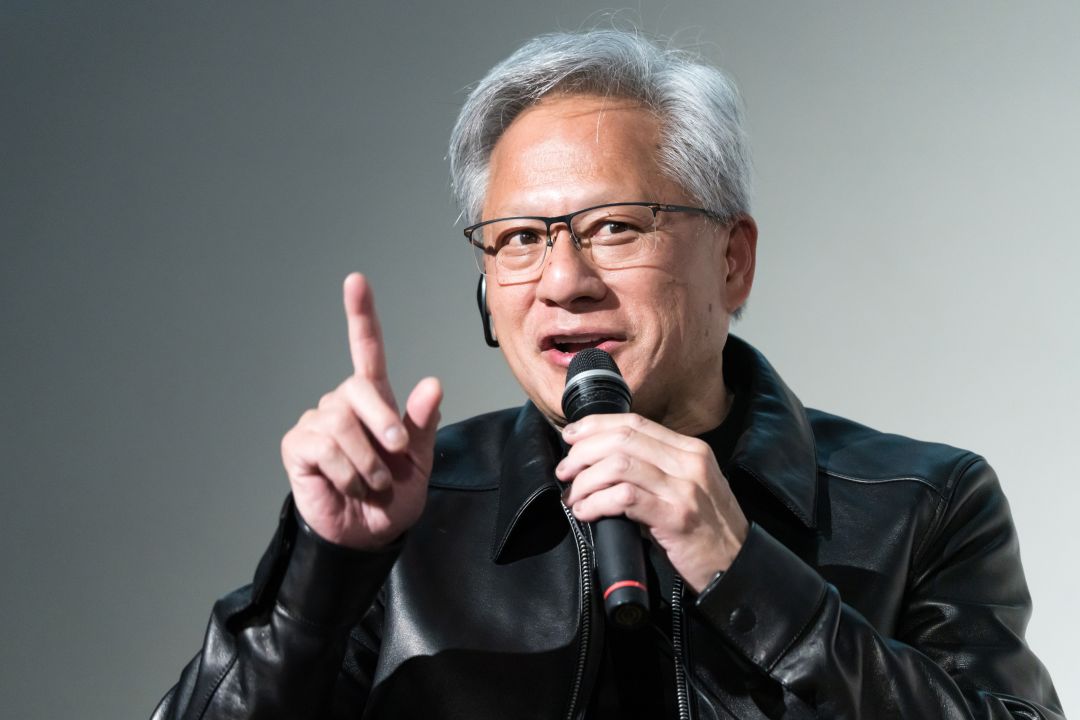
Nvidia’s board announced on Sunday that it is opening an independent investigation after CEO Jensen Huang told staff that he had been unfaithful to his wife. The situation goes well beyond a typical executive affair. The woman involved is Alice Huang, an executive at the Singapore-based cloud company Megaspeed, whom U.S. officials believe was a Chinese spy feeding information to Beijing. Because so many technology and financial partners depend on Nvidia’s central role in the AI boom, the fallout could reach far past the company itself. Huang recently told Bloomberg, in an interview, “I’m responsible for an entire industry.”
A spokesperson for the Chinese Embassy in Washington dismissed the allegations as baseless in late October, and no one has been charged. Still, U.S. intelligence officials reportedly raised their concerns with President Donald Trump a year ago. Senior administration officials told the New York Times they doubt Huang could have been unaware of Alice Huang’s intelligence-gathering role for China for all that time. When Trump was first briefed, officials reportedly did not believe Huang knew, and it is unclear whether that view has changed. The board says it has seen no sign that national security or company secrets were compromised.
To weigh what could happen next, we spoke on Sunday with Jeffrey Sonnenfeld, senior associate dean for leadership studies at the Yale School of Management and founder of the Chief Executive Leadership Institute, which has hosted Huang at its CEO summits. Sonnenfeld is a fan of Huang and believes his career can be salvaged, but he put the odds at “about a 50-50.”
The damage so far
Until now, Huang has been widely revered and trusted across the technology industry. Sonnenfeld called the episode a case of remarkably poor judgment. Even if Huang was simply naive, he said, any other Nvidia employee would be fired over it, and the recklessness alone could cause a lasting collapse in confidence.
Sonnenfeld suggested that Huang’s best hope may be what social psychologists call idiosyncrasy credits, provided he can show he was deceived. The idea comes from social psychologist Edwin Hollander, who argued in a 1958 paper that people earn room to maneuver in a group by demonstrating competence and following its rules. Huang has built up that goodwill since co-founding Nvidia in 1993. But it can run out when a misstep looks self-serving or violates a group’s core norms. In this case, the group includes Nvidia’s board, its roughly 42,000 employees who must follow strict security rules, and, more loosely, the U.S. government, which restricts the company’s exports.
Precedents and succession
There are few real precedents for what is happening now. Sonnenfeld noted that executives who survive personal scandals sometimes resume their careers at other companies. Former HP CEO Mark Hurd is one example. He drove HP to the top of the tech industry by revenue between 2005 and 2010, then was pushed to resign after filing inaccurate expense reports that concealed a personal relationship with a contractor. Oracle hired him about a month later. Huang has no equivalent option, because Nvidia is his own company.
Finding a successor is just as hard. Companies of Nvidia’s size usually have layers of leadership, but Huang has kept the structure as flat as possible, with about 60 direct reports by his own account. That makes it difficult to say who could step in. His two children both work at Nvidia and occasionally come up in succession speculation. Sonnenfeld expects the guessing game to start right away. He also noted that boards in crisis often look for a “messianic solution” from outside, and he floated former Google CEO Eric Schmidt as one possibility.
Why the stakes are so high
Nvidia’s position at the center of a complex web of circular financing is what makes this situation so precarious. The company is not only the biggest supplier of chips powering the AI boom but also, in many ways, the bank behind the buildout. Beyond stakes in hundreds of smaller startups, it has invested in OpenAI, Anthropic, xAI, CoreWeave, and Nebius. In August, it also signed preliminary agreements with Apollo, BlackRock, Blackstone, Brookfield, Goldman Sachs, and KKR aimed at mobilizing more than $500 billion over time. Huang has said Nvidia could backstop as much as a quarter of that sum. Many saw the move as a way to spread risk. A leadership crisis at the center, however, could turn a single stumble into a wider collapse.
What the board must sort out
Sonnenfeld said Huang’s frequent public push to sell advanced chips to China had already made many people uneasy. Dario Amodei, the head of Anthropic, a company Nvidia has backed, criticized those sales at Davos in January, likening them to “selling nuclear weapons to North Korea.”
The board’s independent members, meaning everyone except Huang, will need to establish what technology, if any, reached China and by what routes. That includes a closer look at Nvidia’s relationship with Megaspeed. The Singapore company grew out of a Chinese gaming business and became Nvidia’s largest buyer in Southeast Asia. According to the New York Times, it bought roughly $2 billion worth of chips, a report from October 2025 that raised questions about whether it was helping China get around U.S. export restrictions, either by re-exporting the chips or by renting them to Chinese customers remotely. After that report, an Nvidia spokesperson told The Hill the allegations had been thoroughly investigated and debunked the previous year.
Near-term pressures
For now, Nvidia says Huang will keep running the company. That is a demanding job even for a CEO who already spends much of his time traveling to promote the business. Three House chairmen want a closed-door briefing from Huang on November 18, and Nvidia reports its latest earnings on November 17. Sonnenfeld expects that even if Huang keeps his title, he will have to hand off some day-to-day decision-making.
Governance and control
Huang does not hold the kind of super-voting shares that would cement his control over Nvidia. Sonnenfeld often argues for dual-class structures that give founders extra power, and he says Huang’s success without one is the strongest counterexample to that case. Still, had Huang held such shares, Sonnenfeld added, removing him would be considerably harder.
A wider lesson for tech
Sonnenfeld believes this episode could become a turning point in how the tech industry guards its secrets. He argues the sector has been “way too lax” compared with defense contractors, which operate under security clearance regimes. A recent case points to the same weakness. An OpenAI engineer was arrested last month and accused of hiding a recording device behind a television in an executive conference room. OpenAI has said it has no indication that model weights, source code, or customer data were accessed, but the case shows how exposed tech companies are to people who get close to them.
Huang may well survive the investigation, and Sonnenfeld hopes the board clears him of knowingly aiding anyone. The bigger test will come when Nvidia’s employees, customers, and partners, along with the millions of Americans who hold Nvidia in their 401(k) plans, must decide whether an AI economy built largely on Huang’s judgment still makes sense.