How Olaf Sakkers Is Trying to Crack Venture Capital as a First-Time Fund Manager
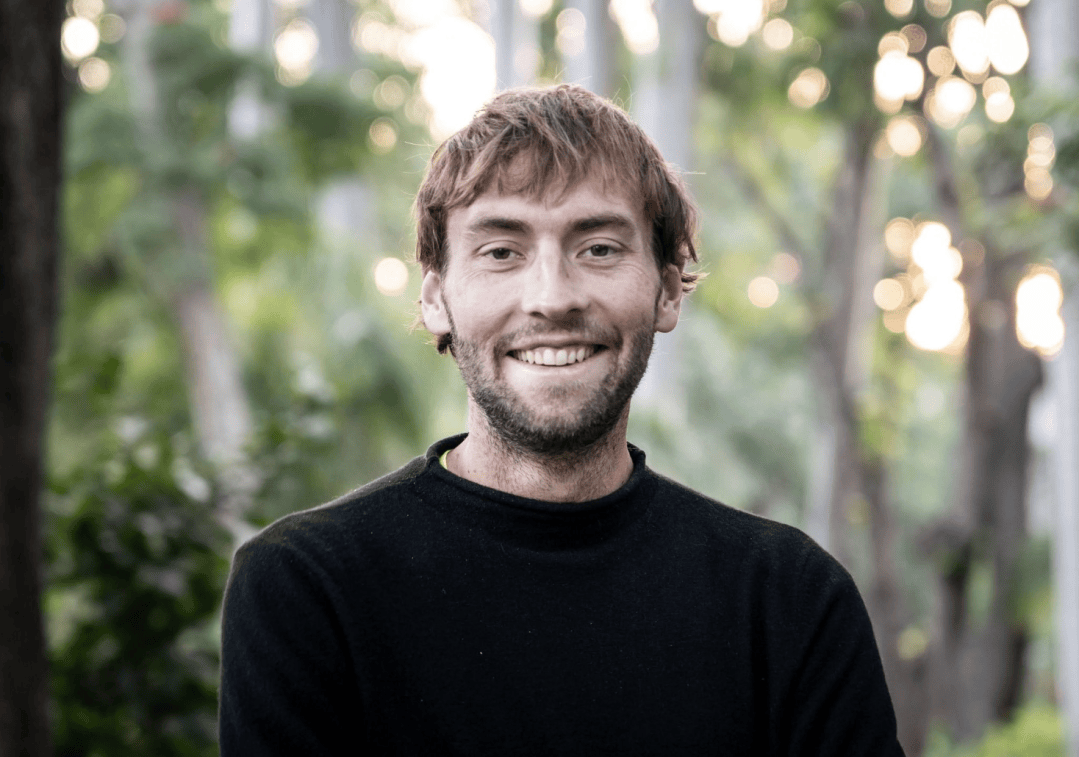
Breaking into venture capital is hard for anyone launching a first fund, and it is harder still right now. According to PitchBook, managers raising a fourth fund or later took 88.2% of U.S. VC fundraising dollars in the first three quarters of this year, while first-time funds collected just 4.5%. Only 81 first-time funds closed in the first nine months of 2026, and PitchBook estimates that this will be the weakest year for first-time managers in at least a decade.
Olaf Sakkers has spent the past five years showing that a tough market is not an impossible one. He founded RedBlue Capital in 2021 and closed its debut fund in 2023 with roughly $5 million in commitments. He has since held a first close on a second fund, which he expects to total at least $50 million.
From South Africa to the venture world
Sakkers grew up in South Africa and studied anthropology at Princeton, focusing on global health and health policy. His thesis looked at HIV in his home country. After graduating, he moved to Israel and served in the Israel Defense Forces, where he held a desk job liaising with the U.S. military and first became interested in autonomous vehicles.
That interest led him to Michael Granoff, founder of the venture firm Maniv Mobility and an early backer of the electric-vehicle company Better Place. Granoff had money to invest and hired Sakkers on the spot. Neither of them had been a venture investor before, so they built a fund almost by accident and learned as they went. Sakkers ran the day-to-day investment process, backing Israeli founders who were bringing cybersecurity skills into the auto industry, and later expanded the search to the U.S. and other markets.
By 2021 he was an equal partner in Maniv’s economics, but he wanted a more formal and scalable structure, so he set out on his own. RedBlue now invests in what he calls the “real economy,” including robotics, logistics, manufacturing, and energy.
Winning over skeptical investors
Fundraising has tested Sakkers’ stamina as much as his sales skills. He says institutional limited partners, such as endowments and pension funds, have been the toughest audience. His checks are small and theirs are large, and their risk models are designed to avoid losing money outright, which pulls them toward established brands.
He compares this to repeat founders, who are seen as almost destined to succeed after a previous company. First-time founders, by contrast, often struggle against what he calls the “gravity of perception,” where a dominant brand shapes how people see a newer one. His answer is to let results do the talking, though he admits that takes time. In his view, it is a long game built on trust and a track record earned gradually.
The first fund was essentially a proof of concept, backed by limited partners he already knew, including family offices. The second fund draws on both family offices and institutions.
A hands-on, small-check strategy
RedBlue writes checks of $50,000 to $100,000 and mostly joins rounds led by other investors. That lets it take part in more deals. The firm aims to be the last investor a founder signs with, offering practical help such as introductions to lead investors like Andreessen Horowitz and Thrive Capital, along with connections to customers. Sakkers believes founders expect little from their VCs, so RedBlue tries to over-deliver on support.
By his account, the results are strong. Of 28 investments, 15 have been marked up, and he puts the fund’s net internal rate of return at well above 50%. There has been only one exit, an acqui-hire, so most of the gains from the small fund remain on paper.
Some public milestones back up part of his story. HappyRobot, an early RedBlue backing, raised a $150 million Series C at a $1.2 billion valuation in August. Westmag, which makes motors for drones and robots and which Sakkers backed at pre-seed alongside Nat Friedman, unveiled an $11 million seed round led by Andreessen Horowitz in June. Flai, an AI company for car dealerships, followed its 2025 seed with a $27 million Series A. Humble Robotics, a driverless-truck startup in whose $24 million seed round RedBlue participated, announced a $51 million Series A led by Obvious Ventures earlier this month.
Discipline as an edge
Sakkers argues that discipline is RedBlue’s main advantage. The firm publishes investment thesis essays, including one on robotics, and runs a custom database that Sakkers built with Claude Code to log relationships, meeting notes, and introductions. The system lets him and his one full-time principal, based in New York, work asynchronously. He argues that AI agents only work well when they have complete information instead of having to guess, so everything gets written down. He contrasts this with Benchmark’s more craft-based approach, which he thinks suits a firm with a long track record, something RedBlue does not yet have.
Long exit timelines for physical-world companies don’t worry him. Even a $50 million to $100 million fund, he argues, can sell stakes on the secondary market.
The broader data is not uniformly bleak. Across recent vintages tracked by the software company Carta, funds between $1 million and $10 million have consistently outperformed funds of $100 million or more at the top end of net TVPI, a measure that compares a fund’s total value with the capital paid into it.
In the meantime, Sakkers keeps knocking on doors, connecting people across different circles, and making his case to reporters. Standing out in a market where the rewards go to a few is difficult, but he says a safer career never seriously tempted him. As he puts it, life is short and regrets linger much longer.