Jensen Huang's Exit Leaves a Major Gap in AI Startup Funding, Investors Warn
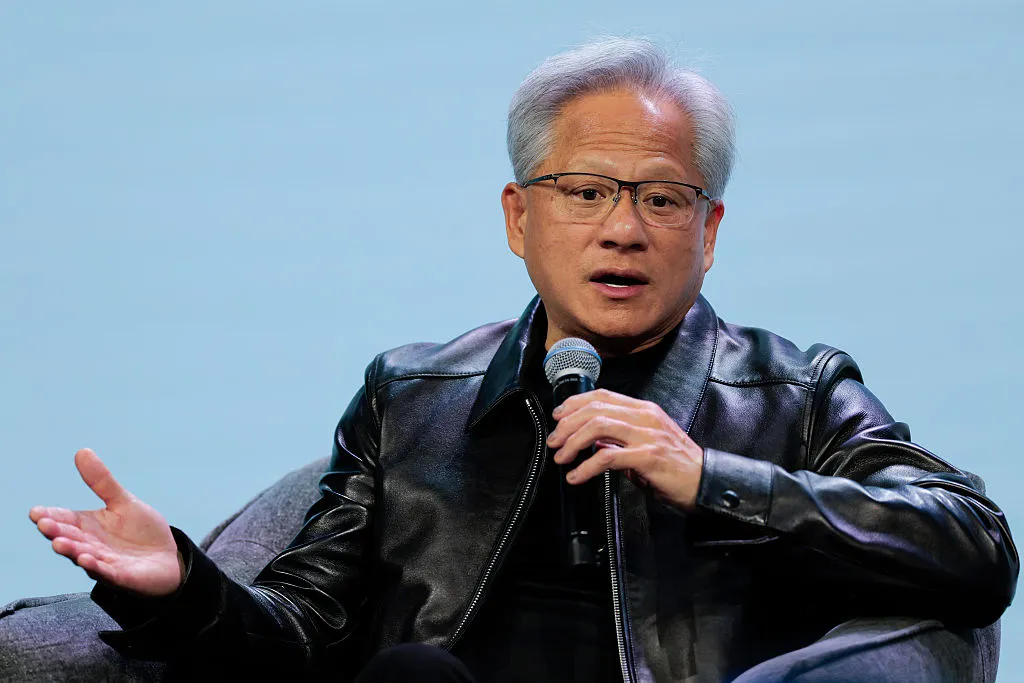
Jensen Huang, the embattled chief executive who co-founded Nvidia and ran it for 33 years, has officially stepped down, and the news hit the industry hard. One neocloud founder said it felt like a bomb had gone off when he first heard.
In recent years Nvidia has become one of the most active investors in startups, pouring tens of billions of dollars into them each year. PitchBook counts the company in 105 funding rounds so far this year alone, often as the largest investor. Maria Davidson, founder of Relational Capital, warned that if Nvidia changes course, many young companies will feel the impact.
Huang's departure leaves the startup world without one of its strongest advocates and, for now, with far less capital. Investors expect the effects to reach deal flow, valuations, fundraising, and even the level of competition across the market.
Shamillah Bankiya of Dawn Capital put it bluntly: Nvidia is backing nearly every AI-native startup, from application companies all the way down to neocloud providers.
Umesh Padval, managing partner at Seligman Ventures, said most of the major decisions to invest in startups came from Huang himself. Padval has known him since they served together on the board of Mellanox Technologies, a networking chipmaker that Nvidia acquired in 2020 for roughly $7 billion. Many hope Huang's eventual successor will restart the dealmaking spree, but investors don't expect that to happen anytime soon.
Interim CEO Colette Kress is expected to make changes, particularly to Nvidia's investments in AI startups that are central to the multibillion-dollar buildout of data centers. Huang's aggressive dealmaking in this area has long worried Wall Street.
One investor described Kress as far more conservative, adding that they doubt she will commit the same amount of money to keep early-stage companies afloat.
Nvidia's biggest bets went to neoclouds, inference providers, and open-weight models, all of which are expensive for smaller companies to build. Zain Javaid, founder of the hardware company Ghost, said Huang's initiatives are a major reason such an ecosystem emerged in the first place.
Nvidia backed CoreWeave while it was still private and took part in two funding rounds for Crusoe, including its $1.4 billion Series E. This year it agreed to buy Hugging Face for $13 billion, a deal expected to close in 2027. It also holds stakes in Mistral AI, Lambda, and Black Forest Labs, and was often the largest investor in these rounds. Last year it wrote an $800 million check into a $2 billion Series B for Reflection AI, before the open-source startup had begun bringing in significant revenue, according to the Wall Street Journal.
Bankiya said Huang believed in open source and, frankly, in Europe, which helps explain why he invested so heavily in AI around the world. If that support pulls back in regions outside the United States, particularly Europe, she warned, it would create a funding and ecosystem gap that no one could easily fill.
Nvidia's dominance was so complete that at times it looked like a monopoly. By backing so many companies with such generous checks, it effectively tied those startups to its chips, which reinforced its position in the market.
If Nvidia becomes more cautious with its startup investments, rivals and smaller competitors could gain ground. Google, for its part, announced two new chips this week, in the middle of the turmoil at Nvidia.
Some investors hope large cloud providers and other chipmakers will step in to back startups and fill the void Huang leaves behind.
Dharmesh Thakker, a general partner at Battery Ventures, expects Big Tech rivals to compete for Nvidia's place as the leading backer. He said the winners will be the companies that offer the best mix of a strong product, an ecosystem and community that can challenge CUDA, Nvidia's software platform for running AI models on its GPUs, and the financial firepower to fund that ecosystem.
Thakker expects companies such as Google, Amazon, Microsoft, and AMD to back established startups that can help drive adoption of their chips and cloud services. He doubts, however, that they will pour hundreds of millions into pre-revenue infrastructure companies the way Nvidia has.
Under Huang, one VC said, infrastructure companies that needed $100 million to $500 million worth of GPUs would often raise about half that amount from Nvidia at valuations of $1 billion or more just to get started. Nvidia's participation gave other investors the confidence to back these companies at such lofty prices.
Nvidia is now expected to be more selective about the new companies it backs, while writing smaller checks into its existing portfolio. That shift is already contributing to falling valuations.
"When Nvidia was on the cap table, everyone felt safe," Padval said. Without that backing, investors say traditional VCs are likely to think twice before writing checks into these startups, and some may even pause certain deals.
Even so, few believe Nvidia's slowdown alone will bring the broader AI boom to a halt.
Everyone agrees Huang's departure is a huge loss for Nvidia. Amulya Vishwanath, a former Nvidia employee who now runs her own venture fund, said founders and leaders must be held accountable, and that the ecosystem is bigger than any single person. The talent within it, she said, will and must keep thriving.