Jensen Huang Steps Down as Nvidia CEO; CFO Colette Kress Named Interim Leader
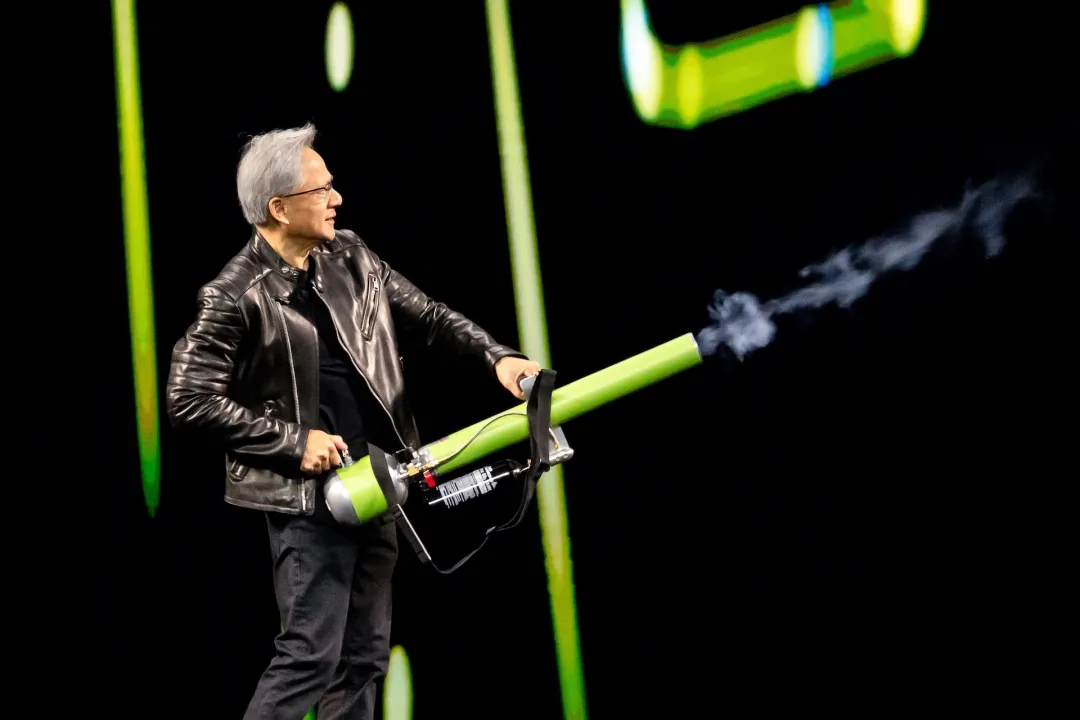
Jensen Huang has stepped down as president and chief executive of Nvidia, the chipmaker announced Thursday. The move came only days after he acknowledged a romantic relationship with an alleged Chinese spy, a development that has raised serious national security concerns in the United States. In a regulatory filing, Nvidia said its board accepted his resignation on Wednesday.
Chief Financial Officer Colette Kress, who also serves as executive vice president, will act as interim CEO until the company selects a permanent successor. She will keep her CFO role.
Nvidia’s stock fell nearly 12% in early trading Thursday. Since Friday, the shares have dropped as much as 19%, erasing more than $855 billion in market value.
A career built on graphics chips and AI
Huang co-founded Nvidia in 1993 and has led it as CEO ever since. Under his direction, the company helped create the graphics processing unit (GPU), a specialized chip that handles graphics for personal computers. Early on, the chips sold poorly, and the company went through lean years marked by struggle and layoffs. Eventually, Nvidia settled on a GPU design so effective that it became the industry standard.
The same chips proved remarkably good at performing huge numbers of calculations at once. That made them popular for cryptocurrency mining and, more recently, for training and running neural networks, the technology at the core of modern AI models.
Nvidia began by focusing on gaming hardware, but by 2006 it had launched CUDA, a software architecture that let developers use its chips for general computing tasks such as scientific calculations and research. Over a decade ago, AI researchers started using Nvidia GPUs to train neural networks, and Huang pushed the company toward AI and data center chips. That shift turned Nvidia into the dominant force it is today.
Riding the AI boom
Nvidia has been the biggest beneficiary of the AI industry’s rapid growth, which relies heavily on its GPUs to train and run large language models. Before ChatGPT’s launch kicked off the AI boom, Nvidia shares traded at about $15. As of last month, they had climbed more than 1,450% to an all-time high of $243. Over the same stretch, the company’s market value rose by roughly $5.5 trillion, peaking at about $5.88 trillion in early October.
Revenue has grown just as dramatically. It rose more than 1,500% to $96.22 billion in the second quarter, compared with $5.93 billion in the third quarter of 2023, just before ChatGPT arrived. Profit grew nearly 88-fold over that period, reaching $59.69 billion as of July 2026, up from $680 million in October 2023.
Much of that success hinged on the continued expansion of AI, a cause Huang championed personally. He traveled to conferences and events around the world to promote Nvidia’s products and AI in general. After the Biden administration imposed export controls on advanced AI chips sold to China, he lobbied hard for looser rules. He also built a close relationship with President Trump, which often benefited Nvidia.
China has long been a major market for the company, but its share of Nvidia’s finances has shrunk in recent years because of strict U.S. export controls and Beijing’s push for domestic alternatives. Chinese customers accounted for about $7.9 billion in revenue in the second quarter, roughly 8% of the total.
Far-reaching consequences
Huang’s departure could ripple across the AI and data center industries, given how central he, and by extension Nvidia, has been to the AI boom. It also raises questions about Nvidia’s extensive AI investments, which have helped fund everything from startups developing new technologies to the massive data centers needed to run them.
Under Huang, Nvidia used its financial strength to back companies that buy its chips, in effect helping to finance demand for its own products. It also lobbied Washington to relax potential rules governing AI and data centers.
At the end of the second quarter, Nvidia reported $99 billion in investments and another $25 billion in commitments. It also had $36 billion in cloud service commitments. These arrangements help AI cloud operators pay for the GPUs and data center equipment they buy from Nvidia, as the chipmaker agrees to purchase compute capacity from them and may earn a share of their revenue.
Nvidia has also invested directly in neoclouds, the companies that supply much of the AI computing capacity. In January it put $2 billion into CoreWeave, and in March it added another $2 billion to Nebius. It was reported to be considering acting as a guarantor for Nscale’s planned data center project in West Virginia, and it has agreed to provide up to $105 billion in credit guarantees for an OpenAI data center campus in Ohio.
The company is also a major investor in the AI labs whose models run on its hardware, committing $30 billion to OpenAI and $10 billion to Anthropic. It has backed Thinking Machines Lab, led by Mira Murati, as part of a deal covering at least 1 gigawatt of its Vera Rubin GPU systems. Nvidia additionally invested $3.5 billion in MediaTek to help the Taiwanese company build custom AI chips that work with its systems.
Many investors have grown uneasy about the heavy debt companies in the sector have taken on to fund the AI infrastructure buildout, and Huang’s exit adds another layer of uncertainty. CoreWeave’s shares fell about 9% on Thursday, giving back part of a 25% rally from Wednesday. Nebius dropped about 16%, and IREN slipped 6.6%.
Leadership transition
Nvidia’s board has named Harvey C. Jones as its first-ever chair. Jones, a managing partner at Square Wave Ventures and former CEO of Synopsys, has served on Nvidia’s board since 1993. As chair, he is expected to play a central role in finding a permanent CEO to replace Huang.
Huang was the largest individual shareholder in Nvidia, but he owned only about 3.5% of the company’s shares. Unlike many prominent tech founders, he does not hold supervoting rights, and the board could have removed him at any time.
He ran a notably flat organization with roughly 60 direct reports. The company had no clear heir apparent or formal succession plan, although two of his children held executive roles there. Because Huang kept such tight control over the company he founded, Nvidia may find it difficult to chart a path forward without him.
The industry will get its first look at the company’s direction next week, when Nvidia reports quarterly earnings on Tuesday.
In a statement, Nvidia thanked Huang for his immense contributions to the company and the wider industry, describing the company as one of the most consequential technology firms in the world.