Startup Offers $1 Million for Solutions to Five Unsolved Materials Science Problems
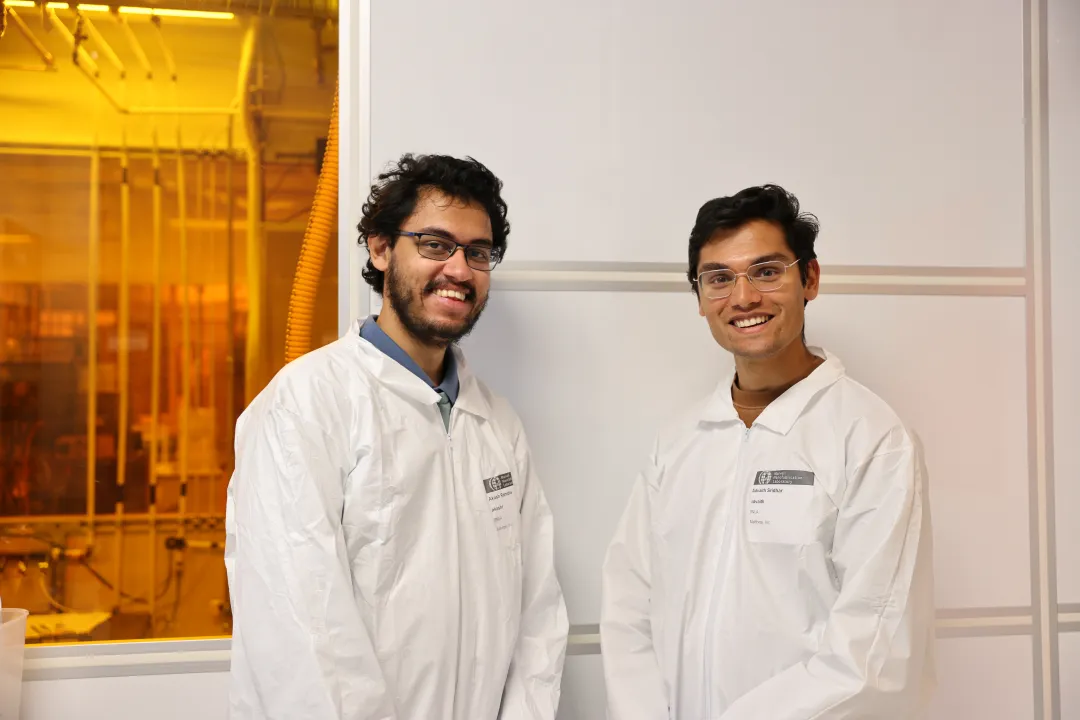
Discovered Materials, a San Francisco startup only a few months old, is using AI models to search for new substances used in advanced computer chips. The company has launched a $1 million challenge that invites AI models to tackle five major open problems in materials science.
Frontier AI systems have recently cracked a string of difficult mathematics problems and made headway in the life sciences. Materials physics, however, has proven much harder for them. Co-founder Advaith Sridhar explained that materials science lacks the clear, checkable definitions that make math problems easy to verify. The company, which went through Y Combinator's spring 2026 batch, wanted to know what the field's grand challenges are and how anyone could measure whether AI is actually making progress.
Materials science has no equivalent of the famous Millennium Prize Problems, so Discovered Materials assembled an advisory group of academics from leading universities around the world to define five unsolved questions. The company is offering prizes totaling $1 million for solutions. The problems are:
- A theory explaining cuprate superconductivity, the phenomenon in which certain materials carry electricity with zero resistance at extremely low temperatures.
- A numerical method for predicting the structure of the boundary between silicon and silicon dioxide, a pairing found in nearly every semiconductor.
- A numerical method that links the grain structure of a material to its thermal behavior, which could help engineers design better heat-dissipating materials.
- A theory predicting why shining light on a material can alter its behavior, especially in relation to superconductivity.
- A numerical method for improving density functional theory, a widely used technique for modeling the structure of atoms and molecules.
Felipe Jornada, a Stanford professor who helped shape the challenges, said many phenomena in materials science are observed but still unexplained. Solving them would deepen our understanding of physics and directly influence how electronics are built, how energy is stored, and how future materials are made.
Before publishing the challenges, the company tested them on frontier AI models. It gave AI agents internet access and other tools and let them work independently for days on each problem. The agents made little progress. Still, a more powerful model or a larger compute budget could change that picture quickly.
Sridhar said the company does not care who cracks the problems, whether it is a university researcher, an independent team, or a major AI lab. The goal is to set benchmarks. Progress on these problems, he argued, will show whether AI systems are getting better at this kind of scientific work and will also expand human understanding of how materials behave.
The challenge also reflects a broader shift in science. AI is increasingly able to produce insights and methods that researchers did not expect, which makes deciding which questions to ask more important than ever. Sridhar described a new approach in which researchers define the verification criteria and challenges first, then invite others to propose explanations. Choosing the right questions, he said, is difficult in this field, and the academic advisors were central to that process.
Discovered Materials focuses mainly on developing new materials for semiconductors. It works with major chipmakers on joint research and also funds its own scientific projects. When the company announced its seed round in August, Sridhar said he hoped it would produce a useful material within a year. He now believes that timeline is shorter, and he is more confident the company can reach commercially useful materials in less than a year.