Was Alice Huang a Chinese Spy? What the Evidence Shows So Far
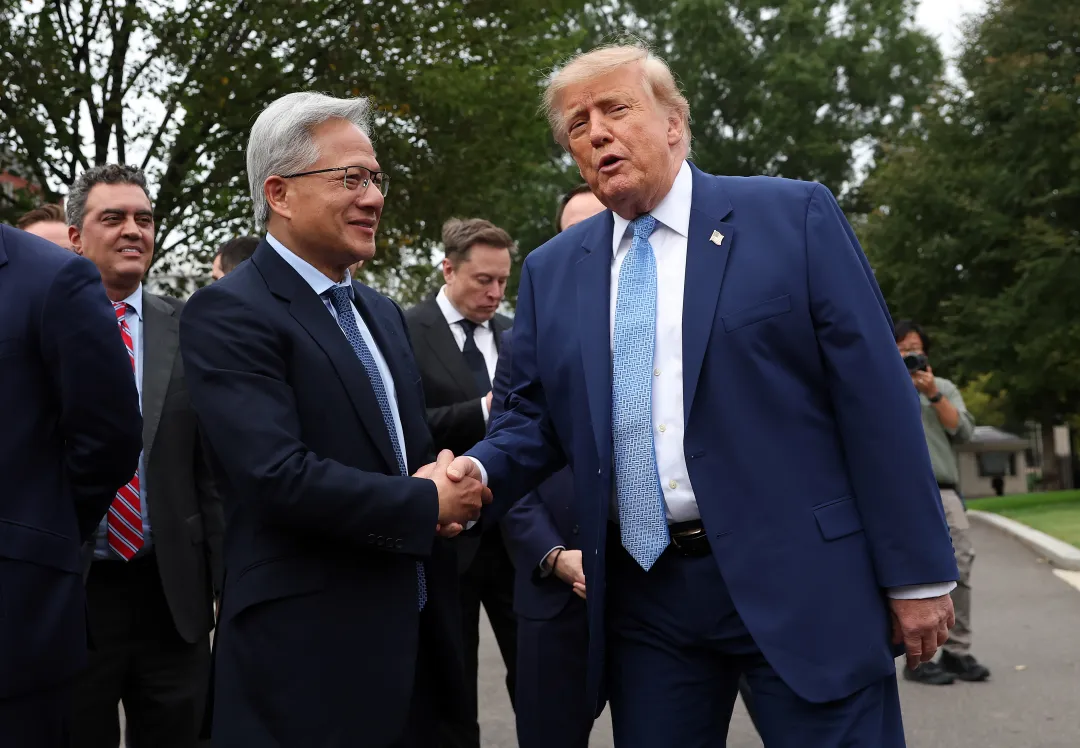
At the center of the Nvidia scandal is an allegation that has not been proven: that Alice Huang, a former executive at data-center company Megaspeed, is a Chinese spy. She had an affair with Nvidia CEO Jensen Huang. He abruptly stepped down on November 12 after acknowledging the relationship, then was just as abruptly reinstated on Monday, earlier this week.
The public record is murkier than the headlines suggest. U.S. intelligence reportedly tracked Alice Huang’s contact with an officer from China’s intelligence service, but officials have not publicly shown evidence that she was assigned to target Nvidia’s chief executive. Over the past week, after President Trump successfully pushed to bring Jensen Huang back, the administration has played down the accusations it had once circulated internally. Whether that shift reflects new intelligence or political pressure is the key open question.
The allegation itself, by contrast, has a clear origin inside the White House. It first appeared in a highly classified memo written in March under the supervision of Secretary of State Marco Rubio and shared with White House officials before Trump’s May trip to China. The memo was partly the basis for the New York Times’ initial report on the scandal, published October 29, and its existence was first reported on November 8.
According to the Wall Street Journal, the memo did not definitively conclude that Alice Huang was a Chinese spy. CNN, however, has reported that the memo did conclude she was an asset of Chinese intelligence.
What is better established is that Alice Huang was in contact with Chinese intelligence. The Ministry of State Security (MSS) is Beijing’s civilian spy agency, responsible for both foreign intelligence and domestic counterintelligence. Last weekend, the Times, citing people familiar with U.S. intelligence reports, said Huang was in contact with an MSS officer from the spring of 2025 until this fall. That period overlaps with her relationship with Jensen Huang. The Chinese government has dismissed the spy claims as a “smear,” while Megaspeed says Huang left the company in August 2025 and that its business is legitimate.
Even so, top Trump administration officials have largely discredited the espionage claims, along with the idea that Nvidia fell victim to spying or foreign influence. Attorney General Todd Blanche, who served as Trump’s personal defense lawyer before taking over the Justice Department, told reporters on Tuesday that he had no reason to describe Nvidia as anything other than a good corporate citizen. The same day, Trump said a pardon was an option for Jensen Huang, though he did not believe one would be needed. Senior intelligence officials reportedly told Congress that the government apparently has no actual evidence the MSS directed Alice Huang to begin an affair with Jensen Huang.
None of these statements necessarily clears Alice Huang of being an intelligence agent. Instead, they point to a different theory: that Beijing did not tell her to start the relationship, and that Jensen Huang broke no law by having it. Still, not being ordered to have an affair is not the same as not being a spy.
Viewed one way, the circumstantial evidence around Alice Huang looks quite suspicious. She was a senior executive at a company investigated for illegally funneling Nvidia chips to China. Her husband, Kang Wei, is said to have even closer ties to the MSS, and some sources say he worked for the agency.
The timing of the government’s change in tone is at the heart of the matter. Trump has said he lobbied the board “directly and indirectly” to reinstate Jensen Huang as CEO, so it would not be surprising if officials who serve at his discretion were framing the case in ways that fit his agenda. That would not necessarily make their assessments wrong. But unless new intelligence has actually settled the question, and none has been publicly identified, that backdrop is critical. CBS has also reported that Rubio, whose office oversaw the original memo, has privately voiced concerns about aspects of Jensen Huang’s return.
Doubts exist elsewhere, too. Earlier this month, CNN reported that the intelligence community was still working to understand Alice Huang’s relationship with Jensen Huang, and that the intelligence collected on her so far does not prove she was acting as a spy for Beijing. After a briefing from top intelligence officials earlier this month, Rep. Jim Himes (D-Conn.), the incoming chair of the House Intelligence Committee, said he was unsure whether she was a spy or a “useful idiot.” This week, the Wall Street Journal also pointed out that under Chinese leader Xi Jinping, senior corporate executives routinely maintain ties to the country’s intelligence service without being formally recruited as assets.
With so many conflicting claims, most of them from anonymous government sources, large questions remain about what actually happened. Several stand out:
- Alice Huang reportedly was under U.S. surveillance for more than a year. If the government suspected her of espionage, why wasn’t Jensen Huang warned earlier, and privately, to avoid the market turmoil that followed the recent disclosure? One explanation given is that alerting the Nvidia chief could have tipped her off that her cover was blown.
- If Alice Huang was a spy, what information did she pass to the Chinese government, and how much influence did she actually have?
- Most importantly, how did the allegation reach the public? The likeliest answer is a leak. A source told CNN that Rubio briefed Trump on the intelligence in May, yet Trump has since said he only recently learned of the concerns, and in October he presented Jensen Huang with the National Medal of Science. Officials who felt unable to get through to the president may have turned to reporters instead, which would explain how the contents of a memo whose existence was never disputed ended up in print. Who leaked it, and whether they anticipated the fallout, remains unclear.
There are answers to all of these questions, of course, but when the public will get them is anyone’s guess. Jensen Huang is scheduled to appear before the Senate Banking Committee next week, and judging by some members’ statements, he is likely in for a rough session. Still, congressional hearings, especially public ones, rarely uncover information that has not already come to light.