Yale's Sonnenfeld Calls Nvidia a Drag on U.S. Industrial Strength, Not Its Champion
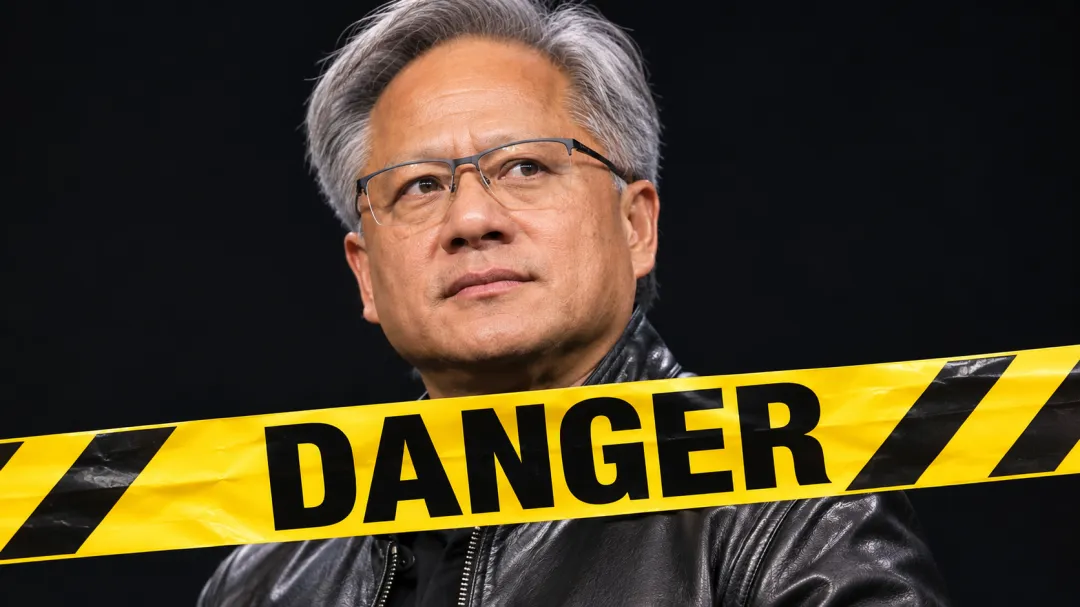
Investors welcomed Jensen Huang’s return as Nvidia’s chief executive on Monday, but Yale business scholar Jeffrey Sonnenfeld believes the market is cheering the wrong outcome. In his view, Nvidia has put advanced technology into the hands of the country’s rivals at the moment when the stakes are highest. Far from being a standard-bearer for American industry, he argues, the company is “a detriment to U.S. global industrial might.”
Chips reaching China
Sonnenfeld points to research suggesting that Nvidia’s most advanced chips have reached China despite U.S. export controls. He also links the recent slide in Anthropic’s shares to a broader realization: many of China’s widely praised open-source AI models may be closely modeled on the work of leading American labs. Nvidia has maintained that chip smuggling is a non-issue.
Huang’s return drew a warm reception in Asia as well. The Washington Post reported that Chinese state-affiliated media celebrated it, with one Star Market Daily headline declaring, “The king is back!”
Pressure from Washington
The reinstatement came after intense pressure from the White House. Only a week earlier, Nvidia’s chairman had all but ruled out bringing Huang back. Over a weekend of private calls, senior administration officials, led by Vice President JD Vance, urged the board to reverse course, and President Trump phoned board members directly to vouch for Huang. “I made the deal,” Trump told CNBC on Monday.
Sonnenfeld argues that the directors who agreed, including those who brought Huang back onto the board while it is still investigating whether foreign intelligence services targeted him, now face a serious risk of personal liability.
A wave of lawsuits
Legal challenges have already started. A potential class action was filed almost immediately after the earlier controversy, and a shareholder derivative suit followed days later. That second suit is brought on Nvidia’s behalf against the directors themselves and claims the board ignored warning signs about Huang’s ties to Alice Huang, a Chinese national suspected of espionage. The class action seeks compensation from Nvidia and Huang for investor losses, while the derivative suit examines the directors’ own conduct, with any recovery going to the company. Three more suits were filed on November 18, the day after Nvidia’s latest earnings call. All five were filed in Northern California, where the company is based.
Nvidia and Huang also face a Justice Department antitrust investigation, a reported SEC inquiry into the company’s accounting, a possible FBI review, a California subpoena, and congressional scrutiny. A Senate Banking hearing is scheduled for next week, and Huang has agreed to testify. On Monday, an export-control case also led to Nvidia partner Megaspeed being added to the U.S. trade blacklist.
Sonnenfeld on the board’s decision
Asked whether the board’s reliance on government assurances was reasonable, Sonnenfeld said the directors failed to consult genuine experts. He called their directors’ and officers’ liability coverage inadequate and said the board had been slow to investigate, hiring the Wachtell law firm but barely starting its work before reversing its position. He described the decision to restore Huang as a mix of incompetence and cowardice, arguing that the government had leverage the board could not resist. By his count, federal contracts make up well under 1% of Nvidia’s business, so the board faced little real threat. He noted that Trump could end federal investigations but could not stop shareholder litigation, and he estimated that as many as 30 suits could follow, all of them costly.
He also said opposition is bipartisan, pointing to 14 Republican senators and prominent conservatives who have criticized the move. In his view, that backlash may help explain the drop in Nvidia’s stock on Tuesday. He added that the board has not seen any classified findings that might clear Huang and that such findings would not change the situation even if it had.
Export controls and smuggling
Sonnenfeld says Megaspeed’s addition to the sanctions list was overdue. He argues that Nvidia’s chips have ended up not only with China’s military, including Northwestern Polytechnical University, a military institution, but also in weapons systems that could flow to Iran and Russia. China has consistently denied supplying weapons to either country, though Nvidia chips have been found in Russian drones. In September, the U.S. ambassador to China said Trump had discussed selling arms to China, an account the president has disputed.
Sonnenfeld also accuses Chinese AI developers of copying American models, saying they are effectively “distilling” Anthropic’s work using high-end Nvidia hardware. Nvidia has denied that its most advanced chips have been smuggled into China, but an Israeli firm, Lava, reported three weeks ago that dozens of Blackwell chips were in the country. Sonnenfeld argues that the damage extends beyond Anthropic to rivals such as OpenAI, xAI’s Grok, Perplexity, and Google’s Gemini. He also said the chief executives of major U.S. companies, including Microsoft, IBM, JPMorgan, Walmart, General Motors, and Caterpillar, have not publicly endorsed the decision.
Is Huang essential?
Sonnenfeld does not believe Nvidia needed Huang back. He says co-founder Chris Malachowsky, who remains at the company, designed its GPUs, and that Jonah Alben leads a team of next-generation chip designers. He credits Ian Buck with creating CUDA, the software that makes the chips useful. In his view, none of those people depend on Huang’s position.
He also rejects the idea that Huang’s forced departure was simply an overreaction to HR rules. Huang has admitted to extramarital affairs, and Sonnenfeld argues that a chief executive who does not live by his own code of conduct makes that code effectively unenforceable.